
Let’s be honest: nobody wakes up on a Saturday morning and thinks, “Oh boy, I can’t wait to spend my afternoon wiping down every single slat on my blinds.”
It’s tedious. It’s annoying. And if you’re like most people, you probably only notice how filthy they are when the afternoon sun hits them just right, revealing a terrifying layer of dust that looks like it belongs on an archaeological dig. Edmonton’s dry climate doesn’t help either — forced-air heating through a long winter kicks up more dust than you’d deal with in a humid city.
If you want to know how to clean blinds without losing your entire weekend, you’ve come to the right place. We’re going to break it down by material, because treating a delicate fabric roller shade the same way you treat a heavy wood slat is a fast track to ruining your window treatments. Let’s dive in.
The Short Answer: Dust First, Deep Clean Second
Here’s the biggest mistake people make: they grab a damp rag and immediately start wiping dusty blinds.
Bad move.
All you’re doing is creating a nasty gray mud soup that smears across the slat and bakes into the finish. Trust me, wiping wet dust into corners is a nightmare to clean up later. The golden rule is simple: always remove the loose dust dry before any liquid touches your blinds.
What You’ll Need (and What to Avoid)
Before you start tearing down your window treatments, gather your gear. You don’t need a professional cleaning crew, just a few household basics:
- A microfiber cloth (or an old, clean orphan sock—seriously, put your hand inside it and run it along the slats. Game changer.)
- A vacuum cleaner with a soft brush attachment.
- A bucket of warm water and a tiny drop of mild dish soap.
What to avoid: Harsh chemical cleaners, bleach, or soaking anything in water. Especially faux wood and real wood. Drown wood in water, and you’ll be warping and cracking your slats faster than you can say “buyer’s remorse.”
How to Clean Wood & Faux Wood (Venetian) Blinds
Wood and faux wood look stunning until they get caked in dust and kitchen grease. Because wood hates moisture, you have to treat it with a little respect. Not sure which type you have? Our venetian blinds guide breaks down how real wood and faux wood differ.
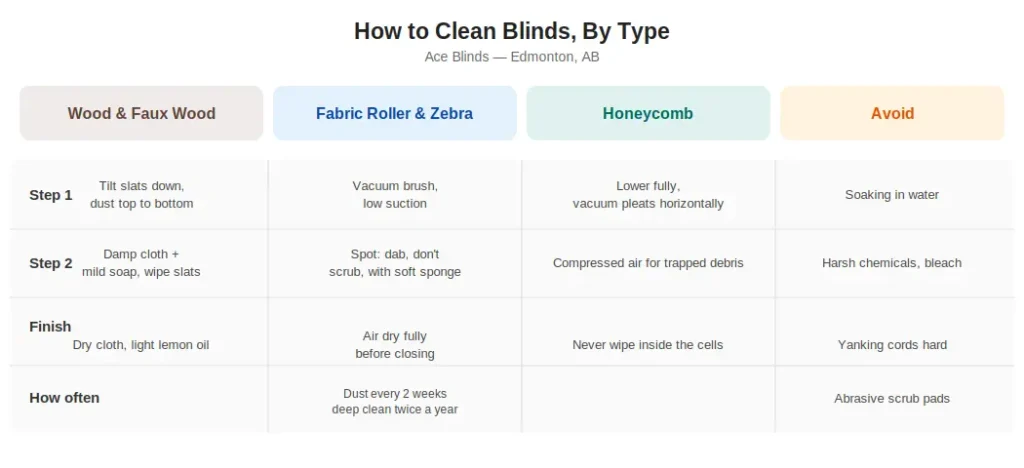
Tilt the blinds so the slats are nearly closed (facing down, but not completely shut). Dust from top to bottom using your microfiber cloth or sock. Once the loose dust is gone, lightly dampen your cloth with your soapy water, making sure it’s damp, not dripping, and wipe each slat individually.
Pro tip: Finish up by wiping them down with a dry cloth or a tiny bit of lemon oil if you’re feeling fancy. It repels dust for a while. Need an upgrade or looking for something new? Check out the selection over at Ace Blinds Wood & Faux Blinds.
Can You Clean Blinds With Vinegar?
Sometimes, but it depends on the material. Vinegar can cut through kitchen grease and sticky film on some blinds, but it’s too harsh for others, so check what yours are made of before you start.
Skip it completely on natural wood and fabric blinds. Vinegar can strip a wood finish and leave marks on fabric.
If your blinds are a material that can handle it, here’s how to do it safely:
- Patch test first. Try your mix on a small hidden spot, like the end of the bottom slat, and wait a few minutes to check for discoloration.
- Keep the cloth damp, not wet. Wipe one slat at a time instead of spraying the blind.
- Wipe dry right away. Follow with a clean, dry cloth so no moisture sits on the slats or in the cord holes.
Not sure what your blinds are made of? Ask us before you reach for the vinegar.
How to Clean Fabric Roller
Fabric is a whole different beast. If you scrub a roller shade like you’re trying to get a stain out of a kitchen floor, you’re going to fray the edges and ruin the coating.
How to Clean Roller Shades
Start with your vacuum’s soft brush attachment on a low suction setting. Gently glide it up and down the fabric. If you’ve got a stubborn spot—like a smudge from greasy kid fingers—dab it gently with a soft sponge, warm water, and a drop of mild detergent. Do not scrub. Just dab and blot.
Got your eye on some fresh window treatments while you’re cleaning? Browse the options at Ace Blinds Roller Shades.
How to Clean Zebra Blinds
Zebra blinds have alternating sheer and solid bands, which makes them even less forgiving than a plain roller shade. Don’t scrub the bands. Rubbing can stretch or fray the fabric and leave the bands looking uneven.
Go over them with a soft brush or your vacuum’s brush attachment on low suction. For a spot, dab it with a soft, barely damp cloth and a drop of mild soap, then blot dry. That’s it.
If yours are past saving, take a look at Ace Blinds Zebra Blinds.
How to Clean Honeycomb / Cellular Blinds
Ah, honeycomb blinds. They are energy-efficient, look modern, and are an absolute magnet for dead bugs, dust, and trapped debris inside those little hexagonal pockets. Honestly? They are the trickiest ones on this list.
Don’t even bother trying to wipe inside those cells. Instead, pull the blind all the way down and use your vacuum’s brush attachment on its lowest setting. Gently run it horizontally across the pleats. If something got trapped inside a cell (it happens, don’t ask how), use a can of compressed air—like the kind you use for your keyboard—to blow it right out the side.
How to Clean Vertical Blinds
Vertical blinds are easier than they look, but the method depends on what your vanes are made of: vinyl or fabric.
Start the same way for both. Close the vanes so they overlap, then dust from top to bottom with a microfiber cloth or a soft brush. Flip them the other way and repeat on the back.
- Vinyl vanes: Wipe them one vane at a time with a damp, soapy cloth, then dry each one.
- Fabric vanes: Use the vacuum’s soft brush on low suction. For a spot, dab and blot. Don’t soak or scrub.
Wide sliding door that needs new coverings? See our vertical blinds.
How Often Should You Actually Clean Your Blinds?
Real talk? Probably not as often as the internet tells you to.
If you give them a quick pass with a duster or a vacuum brush once every couple of weeks while doing your normal cleaning routine, you’ll rarely need to do a deep clean. Aim for a thorough, deep clean twice a year—say, during your spring cleaning (especially useful after an Edmonton winter of dry, dusty indoor heating) and right before the winter holidays when people are actually coming over to judge your house.
Mistakes That Shorten Your Blinds’ Lifespan
Want to throw away hundreds of dollars? Keep making these mistakes:
- Soaking wood blinds: Again, wood warps. Keep the water to an absolute minimum.
- Pulling too hard on the cords while cleaning: We’ve all yanked a cord too aggressively and snapped the internal mechanism. Be gentle.
- Using abrasive scrub sponges: Magic erasers and rough scouring pads will strip the paint and finish right off your blinds. Stick to microfiber and soft cotton.
FAQ
Can you wash fabric blinds in a washing machine?
Not roller or zebra blinds. Unless you want a crumpled, shredded ball of warped fabric that will never fit your window again, keep them out of the laundry machine. Spot cleaning and gentle vacuuming are your only friends there. Smart Drapes are the exception: their panels are machine-washable. Learn more on our drapery page.
How do you clean blinds without taking them down?
Easily! You shouldn’t be taking them down for routine cleaning anyway. Just leave them hanging on the brackets, tilt the slats flat, and dust or wipe them right there on the window.
What’s the fastest way to clean blinds before guests come over?
Panic cleaning at its finest: Close the slats flat facing down, grab a microfiber cloth, and quickly wipe top-to-bottom. It takes about two minutes per window and fools everyone into thinking you have your life completely together.
Quick Recap
- Dust dry first, then clean damp only where the material allows.
- Never scrub zebra bands or fabric shades. Brush or dab instead.
- Skip vinegar on natural wood and fabric, and always patch test.
- Wipe vertical vanes one at a time, top to bottom.
- Only Smart Drapes panels go in the washing machine.